
Welcome to the Mathematical World!
Charles Babbage
The Father of the Computer
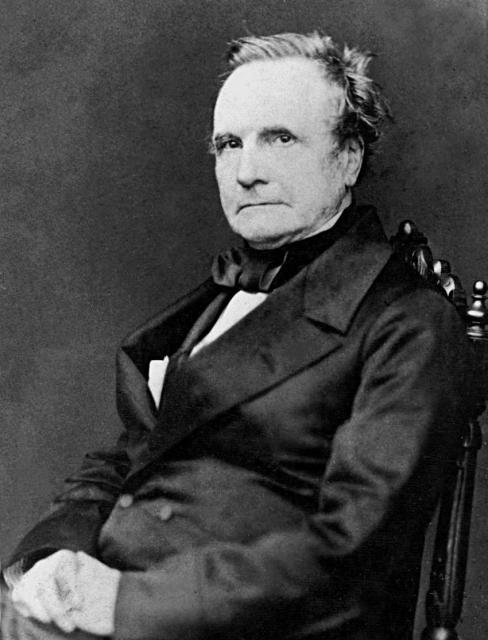
Charles Babbage (1791–1871) was an English mathematician, engineer, philosopher, and inventor, best known for conceptualizing the first mechanical computer. Born in London, Babbage combined his interests in mathematics, engineering, and logic to lay the foundations for modern computing.
Early Life and Education
Babbage showed an early talent for mathematics and mechanical thinking. He attended Cambridge University, where he developed an interest in improving calculation methods. Frustrated by the errors in mathematical tables compiled by human computers, he sought mechanical solutions for reliable computation.
Difference Engine
Babbage designed the Difference Engine, a mechanical calculator capable of computing polynomial functions and producing error-free mathematical tables. The engine used the method of finite differences to perform calculations systematically. Though never fully completed in his lifetime, the Difference Engine demonstrated the feasibility of automatic computation.
Analytical Engine
Building on his Difference Engine, Babbage conceptualized the Analytical Engine, the first design for a general-purpose programmable computer. Key features included:
- A mill (analogous to a CPU) to perform arithmetic operations
- A store (memory) to hold numbers and intermediate results
- Program control via punched cards, inspired by Jacquard looms
- Conditional branching and loops, making it Turing-complete in principle
The Analytical Engine was never built during Babbage's lifetime due to technological limitations, but its design influenced later computing pioneers like Ada Lovelace, who wrote what is considered the first computer program for it.
Contributions to Mathematics and Society
Beyond computing, Babbage contributed to:
- Mathematics: Developed methods for mathematical tables and error reduction
- Economics: Wrote on the economy of machinery and production efficiency
- Engineering: Proposed improvements in mechanical engineering and automation
Legacy
Charles Babbage is remembered as the "Father of the Computer" for his visionary designs of mechanical computing machines. His work laid the conceptual groundwork for modern digital computers, programming, and automation. In recognition of his contributions, the Science Museum in London built a working model of his Difference Engine in the late 20th century, confirming the brilliance of his designs.

All rights reserved by the Mathematical Unity
Contact: +8801400044645
Email: mathematicalhorse1453@gmail.com
Our Discord Server: Mathematical Unity [Ulus Riyadiyat]